GSA Search Engine Ranker review: what it does well, and what it doesn’t
A working assessment of the software, its real total cost, and the people who should not buy it.
Disclosure first: we sell target data for GSA Search Engine Ranker. That makes us a complementary vendor, not an independent reviewer, and you should read this with that in mind. It also means we have no interest in overselling the software — if you buy GSA SER expecting it to do things it cannot do, you become an unhappy customer of ours too. So this review spends as much time on the limits as the strengths.
GSA Search Engine Ranker is a Windows desktop application that automates link submissions. You give it target URLs, content, anchors and credentials; it registers accounts, posts, confirms which posts stuck, and repeats — across dozens of platform types, continuously, without you watching. It has been in active development since 2012 and is still being updated, which in this software category is itself unusual.
That is what it is. Whether it is worth your money depends almost entirely on things that are not the software.
STRENGTHS
What it does genuinely well
It never stops
The core value is unattended throughput. A configured project keeps registering, posting and verifying while you sleep. Nothing in manual link building compares on volume per unit of attention.
It handles platform variety
Article platforms, web 2.0s, wikis, forums, guestbooks, profiles, bookmarks, directories — each with its own registration and posting logic, maintained as platforms change. Rebuilding a fraction of that yourself is a serious engineering project.
It verifies its own work
GSA SER does not just submit; it re-checks whether the link actually appeared and reports verified counts. That feedback loop is what makes automated link building measurable rather than hopeful.
One-time licence, active development
You buy it once rather than renting it monthly, engine updates ship regularly, and the support forum is active. For software this niche, none of that is guaranteed.
LIMITS
What it handles badly
It is not beginner software
The interface is dense, the options are numerous, and the defaults will not serve you well. Expect to spend real time learning what each setting does. People who buy it expecting a “get backlinks” button abandon it within a fortnight.
It is entirely dependent on inputs
The software is a submission engine — output quality is decided by targets, content, proxies, captcha solving and settings. Point it at exhausted targets with thin content and you get exactly that, efficiently. It will not save a bad plan; it will execute it faster.
Windows only, and it wants its own machine
It is resource-hungry and wants to run continuously. In practice that means a VPS — another cost and another thing to administer.
It cannot judge quality
GSA SER checks whether a link posted, not whether the page was worth posting to. Filters help, but the software has no opinion about whether a target is a good neighbourhood. That judgement comes from your target data or from you.
And it will not fix a weak site. No volume of automated links substitutes for a site that deserves to rank. If the underlying pages are thin, links move nothing.
TOTAL COST
The real cost, honestly
The licence is the part people quote and the smallest part of the total. A realistic running setup adds:
Proxies — required for anything at scale, and cheap proxies fail in ways that waste everything downstream
A captcha solving service — non-negotiable for most platforms
A VPS — to run it continuously without occupying your own machine
Content — spun, generated or written, but something has to fill the articles
Targets — either you scrape and verify them yourself, or you subscribe to maintained data
ILLUSTRATIVE COST STACK
One-time licenceProxiesCaptchaVPSContentRecurring: target data
That last line is where we sell something, so treat it accordingly: target data is a real recurring cost whether you buy it or produce it. Producing it yourself is entirely viable and plenty of operators do. It just is not free, and pretending the licence is the total cost is how people end up disappointed.
FIT
Who it is for — and who it is not
Should not buy it
Anyone with one site and no appetite for learning. Setup time alone outweighs the benefit at that scale.
Anyone planning to point it straight at a money site as their only link building. That is a strategy error — see where GSA SER links belong.
Anyone expecting rankings from volume, or unwilling to run proxies, captcha services and a VPS permanently.
It is actually for
Operators running tiered structures at scale — agencies, affiliate portfolios, anyone building supporting layers beneath links they placed deliberately.
If you have properties you want reinforced, content to feed it, and the patience to configure it properly, GSA SER does something no manual process can match on volume.
The recurring question in every forum thread is whether it still works. Short answer: yes, conditionally, and the condition is almost always target supply rather than the software — we have answered that separately.
ORIENTATION
Getting started, briefly
Enough to orient you; this is not a full tutorial.
1
Get it running somewhere permanent
A VPS you do not mind leaving on.
2
Sort out proxies and captcha solving first
Both are prerequisites, not optimisations.
3
Build one project properly
Rather than ten carelessly. Pick engines deliberately, write or generate real content, set your filters.
4
Feed it targets
Either scrape and verify your own, or connect maintained target data. This is the step most new users underestimate, and it determines whether the rest of your setup produces anything.
5
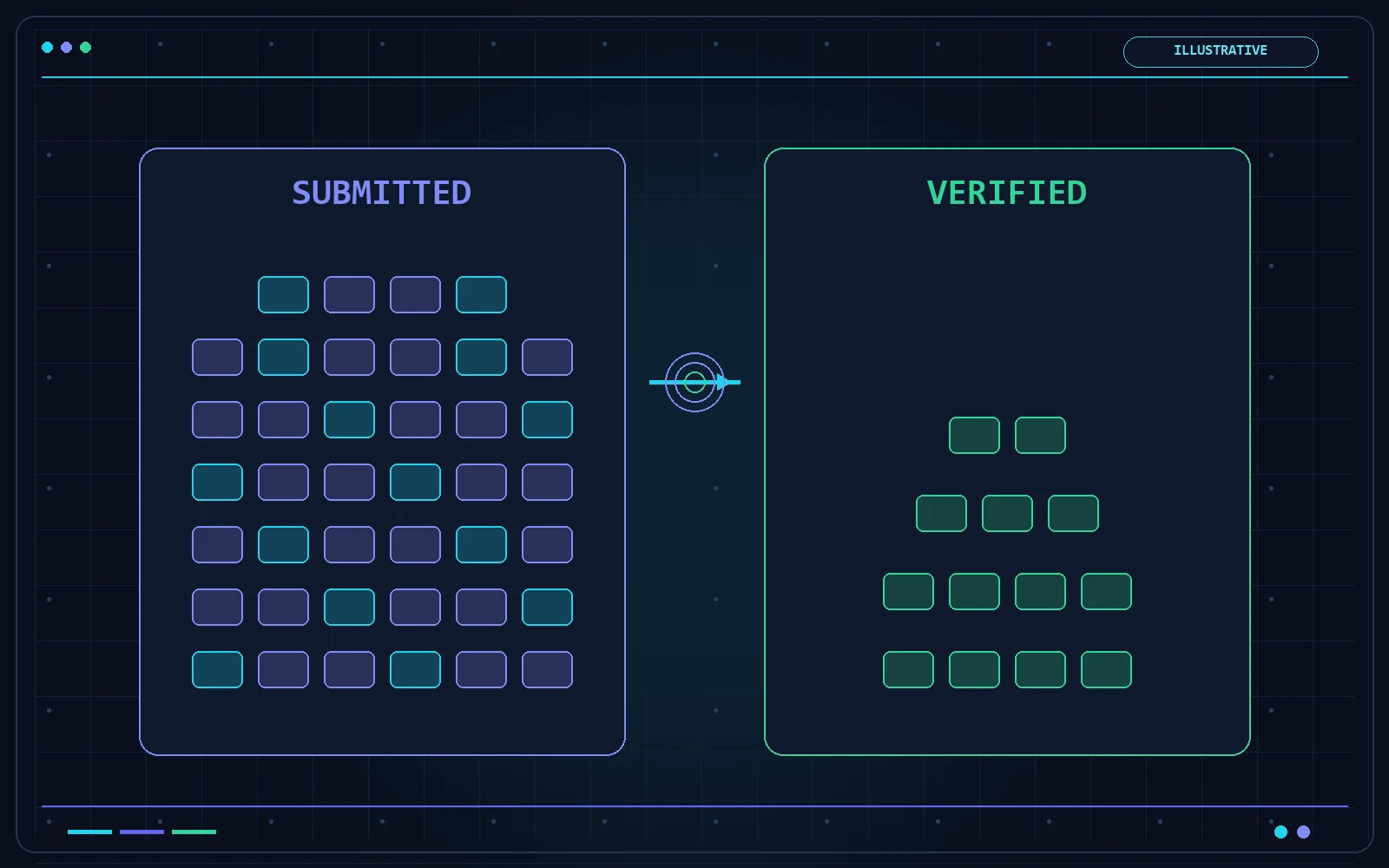
Read the verified counts, not the submitted counts
Submitted means it tried. Verified means the link exists.
ILLUSTRATIVE CONTRAST
Submitted = it triedVerified = the link exists
For what it is worth, our own contribution to that fifth step is continuously re-verified target feeds, with the current pool published on our live stats page and connection covered in the setup guide. Whether you use ours or build your own pipeline, do not skip that step.
Verdict
GSA Search Engine Ranker is well-built software for a narrow job, sold at a fair one-time price, still actively maintained, and routinely bought by people who should not. It rewards operators who understand that it is an execution engine and punishes anyone treating it as a strategy.
If you already know what you want your links to do and simply need them built at volume, it remains the standard tool. If you are hoping it will tell you what to build, it will not.
FAQ
Review questions
Is GSA Search Engine Ranker worth it?
For operators running tiered link building at scale, yes — nothing else automates this breadth of platforms with verification built in. For someone with a single site who wants a few good links, no: the learning curve and running costs outweigh the benefit, and manual placement would serve you better.
Does GSA Search Engine Ranker still work?
Yes, with the caveat that results depend on target supply and setup far more than on the software. Most reports of it no longer working trace back to exhausted or dead target lists rather than the tool. We cover this in detail on does GSA SER still work.
How much does GSA SER cost to run?
The licence is one-time; the running costs are ongoing. Budget for proxies, a captcha solving service, a VPS, content, and target data. Those recurring items typically exceed the licence cost over time, and any review quoting only the licence price is giving you an incomplete number.
Is GSA SER safe to use?
The software is safe to run. The strategy question is different: automated links are low-discrimination by nature, which is why experienced operators use them on supporting tiers rather than pointed directly at properties they cannot afford to damage. Structure is what makes it safe, not the tool.
Do I need a VPS for GSA SER?
In practice, yes. It is Windows-only, resource-hungry, and designed to run continuously. Running it on a working machine is possible but unpleasant, and stopping and starting it undermines the throughput that justifies buying it.
Do I need to buy verified lists?
No — you can scrape and verify your own targets, and many operators do. What you cannot do is skip the step: GSA SER needs somewhere to submit. The choice is whether to spend your own proxies, compute and time producing target data, or subscribe to maintained data. We sell the latter, so weigh that accordingly.
Is GSA SER better than other link building tools?
For automated multi-platform submission with verification, it is the most complete option in its category. It is not comparable to outreach tools, content platforms or manual link building services — those solve different problems, and most serious operators run GSA SER alongside them rather than instead of them.
 ILLUSTRATIVE COST STACK